

Hello and welcome back to Five Things!
14 years ago I couldn’t sleep. I was lying in bed, thinking “what have I done? It is starting all over again!” - It was the last night before my wife came home from the hospital with our newborn daughter, which I affectionately call K3. Her older brother was 6 years old at that time and her sister was 9 years old. We were practically done with the hard part of being a parent, we could sleep through again. And then we decided to have another baby.
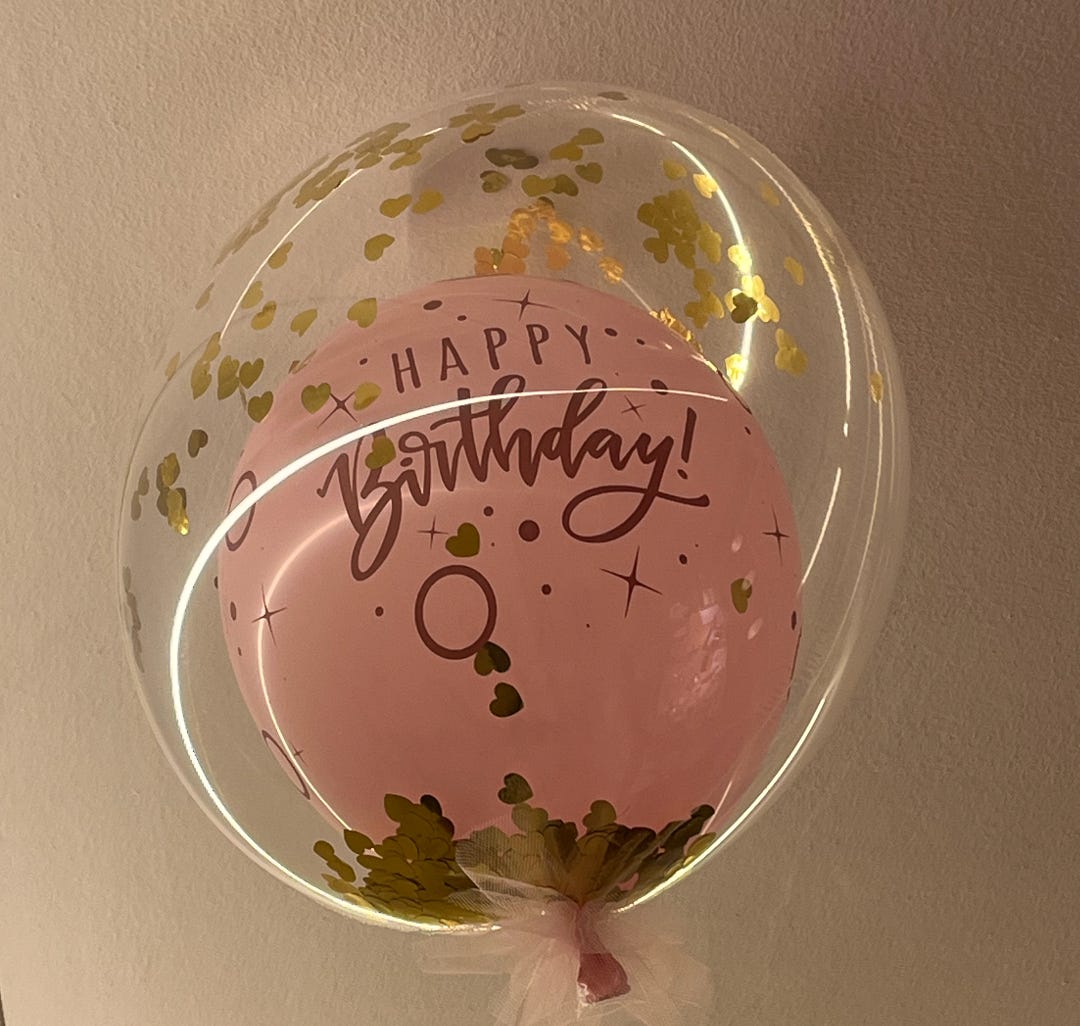
What a wonderful decision that was! I didn’t regret it for one second. K3 is just a wonderful kid and I love her dearly. Also, she turned out so great that we decided to have K4 a couple years later. And now K3 turned 14 and is just an amazing human being, even though she is of course a real teenager who tests her parent’s patience every single day. Happy Birthday, Lu!
Enjoy these Five Things! 🕺
America Won’t Be Easily Forgiven—Even After Trump Is Gone

No American voter can claim they didn’t know what was coming if they reelected a man who had incited an insurrection against Congress, used the Covid-19 pandemic to divide the public as more than one million Americans died, falsely accused Haitian refugees of eating people’s pets, and even said he’d put people in camps. It’s just that they wanted or tolerated a second Trump presidency as long as whatever awfulness accompanied his second term only affected people other than themselves.
That so many Americans knowingly and willingly allowed such a clearly dangerous individual back into power lays bare an American body politic awash in callous self-absorption. Who is genuinely surprised that a society that has reached such depths of moral decay that it does nothing to stop gun violence even after mass shootings of children would hand the keys to the White House to Trump and his Cabinet of horrors because its citizens just “didn’t find [Kamala] Harris compelling,” wanted to cosplay as Western saviors of the people of Gaza—who, by the way, preferred Harris—or believed Trump would lower their living costs even as he campaigned on inflationary tariffs?
Friends forgive, but we won’t forget.
America Isn’t Ready for What AI Will Do to Jobs

There’s no shortage of ideas about what to do if AI hollows out large swaths of work: universal basic income, benefits that don’t depend on employers, lifelong retraining, a shorter workweek. They tend to surface whenever technological anxiety spikes—and to recede just as reliably, undone by cost, politics, or the simple fact that they would require a level of coordination the United States has not managed in decades.
The 119th Congress is a ghost ship, steered by ennui and the desire to evade hard choices. And the AI industry is paying millions of dollars to make sure no one grabs the wheel. To cite just one example, a super PAC called Leading the Future—which has reportedly secured $50 million in commitments from the Silicon Valley venture-capital firm Andreessen Horowitz and $50 million more from the OpenAI co-founder Greg Brockman and his wife, Anna—plans to “aggressively oppose” candidates from both parties who threaten the industry’s priorities, which boil down to: Go fast. No, faster.
Nobody has a clue, it is so terrifying. It’s not that AI is coming around the corner all of a sudden, this development is at least ten years old, at least that’s when I made the first investments in AI. And of course nobody can predict exactly when something will happen, but it was clear that this technology will move forward quickly. Now we have reached a point where everything will change so quickly.
Losing Faith in Atheism

The most prevalent atheist world view goes by many names—empiricism, positivism, physicalism, naturalism—but the term that best captures the fullness of its present‑day iteration, as I see it, is scientific materialism. Roughly speaking, this view holds that the material world is all that exists, that humans can know this world through sense perception, that the methods of science allow us to convert the raw data of these perceptions into general principles, and that these principles can be both tested and put to practical use by making predictions about future events.
As world views go, scientific materialism has a lot to say for it. It tells us that humans are capable, without any supernatural aid, of coming to understand, and ultimately to master, all of reality. It tells us that the store of human knowledge is constantly increasing and continuously improving our material conditions. To this end, it points to the astonishing human progress that has occurred in the time of science’s reign. And it encourages us to enjoy the fruits of this progress as much as possible, since our life here on earth is the only one we’ll get.
I have been a strong-believing atheist all my love, but sometimes I do think I haven chosen the more exhausting path.
How to Use Boredom as a Performance Enhancer

To understand why boredom is useful today, you have to understand what it is.
Boredom is a psychological discomfort. It’s a signal that what you’re doing is no longer delivering a meaningful return. The process works like this:
You’re engaged in an activity, but it stops providing useful feedback (e.g. progress, stimulation, benefits).
The discomfort of boredom kicks in.
Your mind begins to wander
That wandering produces new, often useful ideas.
Boredom isn’t a flaw. It’s an ancient survival tool. As humans evolved, boredom helped us avoid wasting time on low-return activities. If hunting wasn’t working, boredom nudged us to consider other options—gathering plants, moving locations, trying a new strategy.
It is so hard to explain to our kids why boredom is so important when there is always a gadget within reach. And of course the same goes for us adults.
2 to 3 Cups of Coffee a Day May Reduce Dementia Risk. But Not if It’s Decaf.

A large new study provides evidence of cognitive benefits from coffee and tea — if it’s caffeinated and consumed in moderation: two to three cups of coffee or one to two cups of tea daily.
People who drank that amount for decades had lower chances of developing dementia than people who drank little or no caffeine, the researchers reported. They followed 131,821 participants for up to 43 years.
I’m such an overachiever. Follow me for more longevity expertise.
That’s it. Have a great Sunday! If you missed last Sunday’s edition of Five Things, have a look here:

— Nico