
Good Morning! 🏃🏻♂️
Strava informed me on Saturday that I had just ran my fasted half-marathon of the year. It neglected to inform me that this was also the first one this year. I finally got back into shape to run around the Hamburg airport again for a nice 21,54 km.
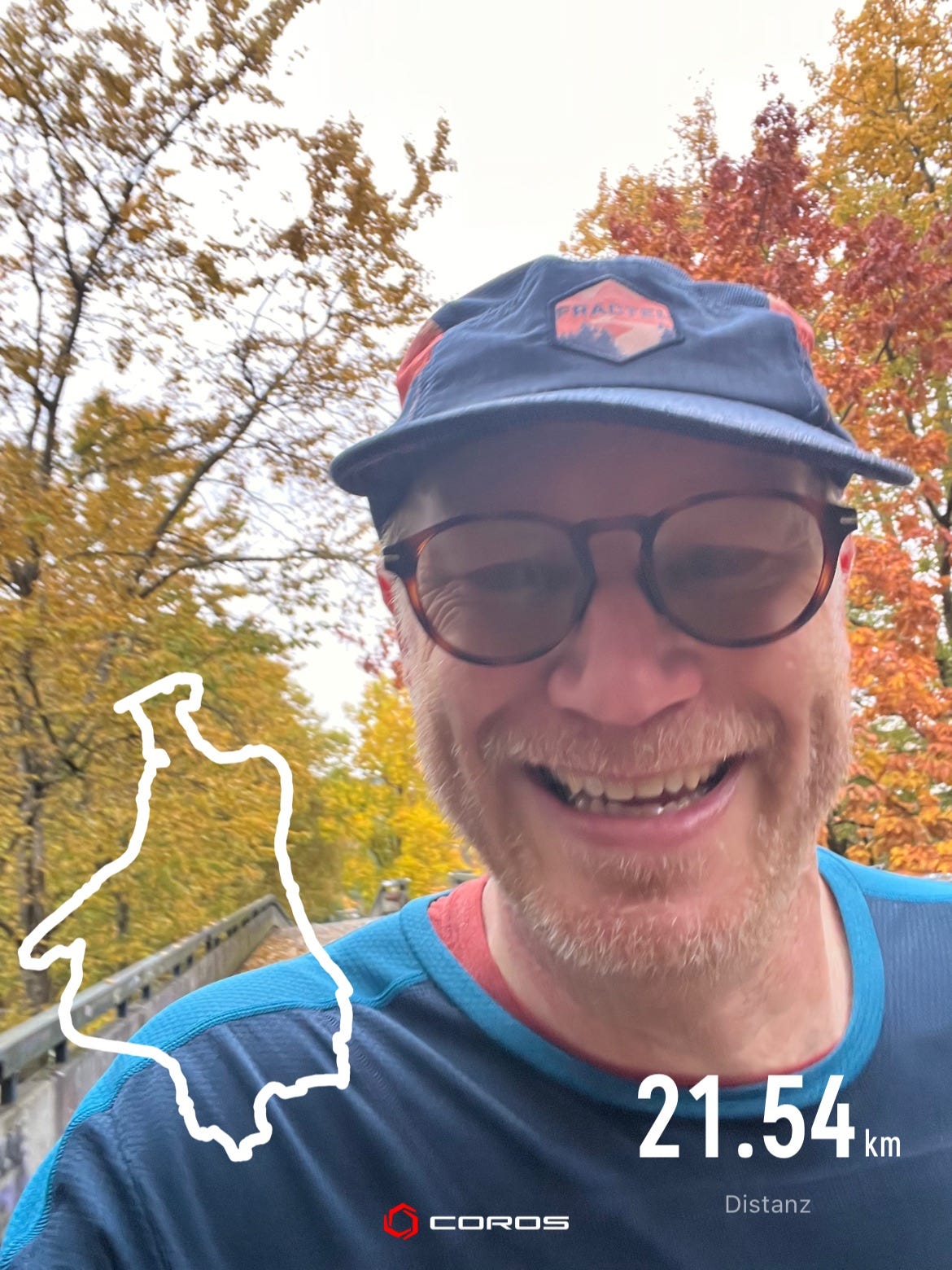
It felt amazing. And I do have to admit that I felt a bit sore on Sunday, but I did run my fastest half-marathon of the year and that’s probably the reason for it…
Also, fall has kicked in and it is so beautiful out there. I did run by a runner who wore a fleece beanie, long tights, a jacket, gloves and a buff pulled up over his nose. I’m not judging here, but to me it is still perfectly fine running shorts season out there.
Here’s my selection of reading material for you!
How UTMB Became a Chaotic Spectacle and the Race Women Runners Deserve
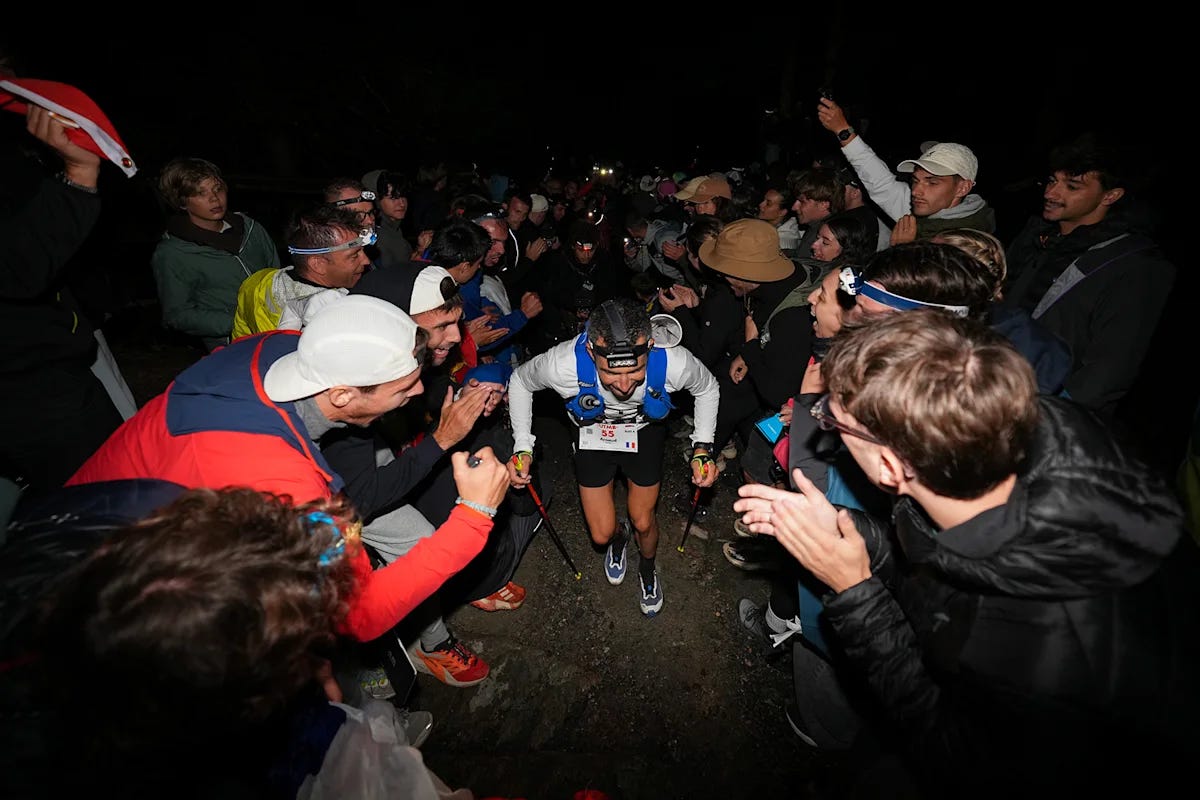
Dropping into the spectacle of what UTMB has become today, with more than 2,000 runners in the main event—not to mention a series of other trail races that occur throughout the week—brand activations, product drops, nightly parties, and all the rest, this history felt important. With so few women participating, Moehl's triumph felt like more than a race win; it felt like the first brick in the foundation of something colossal. But I had to see what UTMB was all about firsthand to understand what's been built on top.
UTMB means the circus is coming to town and Chamonix is all about the race, the brand activations and FOMO galore.
Sounds like fun.
The One Dollar Ultra: A Love Letter to New York City

Nearly 200 runners lined up outside Printers Alley, a sports bar in Times Square, with their dollar bills in hand. As race directors Austin Lo and Victor Zeitoune started the race, runners deposited their bills in a bucket, beginning their journey in the second annual One Dollar Ultra.
Inspired to “do something ridiculous” after following the Go One More Ultra hosted by Bare Nutrition in Texas, Lo and Zeitoune plotted over dinner, arriving on the $1 concept.
“It would be really fun if we did something a little bit grungy, rowdy, ‘anti’ the formality of these other ultra races,” Zeitoune said. “We ended up saying that… we’ll ask people at the start of every lap to put one dollar in.”
Weeks after the original brainstorm concluded by writing the race’s “$1” logo on a napkin, the original One Dollar Ultra on the West Side Highway had a far wider reach than the friends expected, enabling its sophomore breakout.
This is such a wonderful idea! I love the creativity behind creating this race. Would you want to run an ultra race through NYC?
Gen Z is ditching bars for run clubs — and finding more than friends along the way

Spending by Gen Z and millennials on fitness-related categories rose at a sharper rate year over year in early 2026 than bars, according to a report from Bank of America released earlier this year. Gen X and older generations did the opposite, with bar spending climbing at a faster clip in the period tracked by the bank.
Said another way: Younger cohorts are shifting “from barstools to barbells,” according to Joe Wadford, an economist at Bank of America. It’s part of a longer-term trend of Americans drinking less and less, sending the share of people who say they consume alcohol to record lows.
The kids are alright, I guess. It’s good to see that alcohol, cigarettes and drugs do not play the role they used to when I was younger.
Trail Running Saves the World

Trail running is inside one of those monumental transformations now. The scale and pace of change in public-land law and policy are head-spinning.
On one side, public lands face mounting pressure from drilling, mining, logging, road-building, and other forms of industrialization. On the other, the agencies charged with managing them face incapacitation as expertise and staffing decline — the people needed to keep research current (historical, ecological, and climatic), make informed decisions, maintain campgrounds and trails, and engage communities that depend on these landscapes.
These bureaucratic changes eventually become obvious and felt. The trailhead bathroom stays locked. The downed tree doesn’t get cleared. The washed-out switchback doesn’t get repaired. No one answers the phone at the ranger station. The concern is not just that public lands become harder to access. As these institutions weaken, public confidence and support for them can decline as well.
Trail running can be a political act and it reminds me of the slogan “skateboarding is not a crime” from back in the 80s.
Your Humble Shoe Salesperson Might Be an Elite Marathon Runner

A young woman came into Fleet Feet in Minneapolis with days before her first marathon and a big worry: Her knee had started hurting. As Joel Reichow pulled an assortment of shoes for her to try, he reassured her it’s common to feel aches in the final training push.
“Sometimes during the taper, the body just kind of panics,” he said.
What the woman didn’t know was that Reichow isn’t just another guy measuring her foot. Last year, he was the top American finisher at the New York City Marathon, fifth overall, a race he’s set to run again Sunday.
Reichow is one of the Clark Kents of the running world: superfast marathoners who work incognito day jobs selling shoes, either because they need the money or they just enjoy it. Most aren’t recognized by their customers, who typically take twice as long as they do to finish a marathon.
This is why you shouldn’t order your shoes online, you might miss out talking to a really fast runner.
If you missed last week’s edition, you can read it here:

Now, go running!
— Nico
🏃🏻♂️