
Good Morning! 🏃🏻♂️
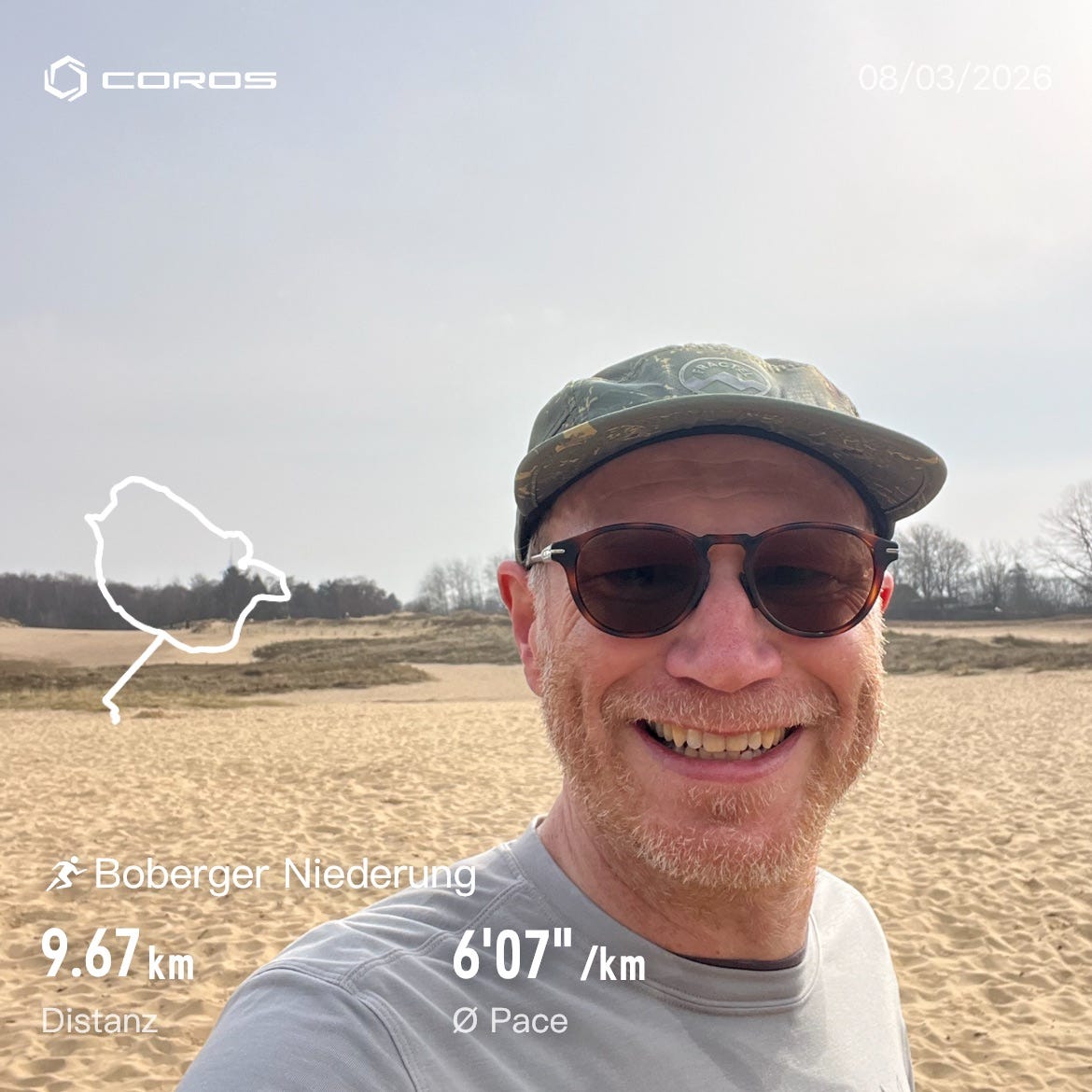
Spring has sprung in Hamburg and I went running again in that beautiful nature reserve in the southeast of the city. This weird sand dune is really something.
This week I really questioned if I could still call myself a runner as I really rarely run these days. But I guess it is good to do things differently every once in a while and if I need to run less to figure out I miss running, then I guess it works for me.
I am also thinking about this newsletter a lot. I still love reading about running, but after doing this for more than three years there are some parts that are getting a bit repetitive. Maybe I advance to Six Things? I dunno. If you have ideas, please ping me.
Trail Running Is Becoming the Outdoor Industry’s Default Sport

For much of its history, the outdoor sector revolved around hiking and mountaineering. Those pursuits might produce powerful imagery that give ardent outdoors types a semi when reading through their latest issue of Mountain Gazette, but they always had limited participation. A summit attempt might take place once a year. A multi-day trek might be a rare holiday. Trail running operates on a different rhythm - It is an outdoor activity practiced weekly, often several times a week, which makes it far more compatible with the product cycles and communities that modern brands depend on.
This helps explain why trail running has become attractive to companies that historically built their reputations elsewhere. KEEN, for example, spent decades selling rugged sandals and hiking footwear. Moving into trail running places the brand inside a culture defined by regular activity, race calendars and digital communities. The presence of athletes such as Browning and Moehl offers instant credibility while linking the company to a sport that has steadily expanded over the past decade.
I totally understand this. Trail Running is something that people can easily do, as long as they find the time to get out of the city and it is just a tad more active than hiking…
‘I try not to think about lions’: Why the Grand Canyon’s ‘R2R2R’ endurance run is not for the faint-hearted
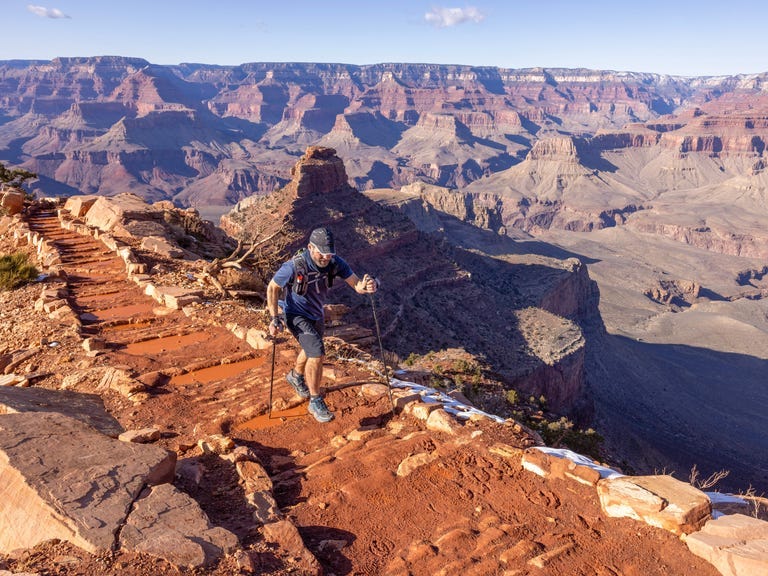
Rim to Rim to Rim (known in ultra circles as ‘R2R2R’ or simply ‘R3’) is an undertaking that is borderline barbaric even in benign conditions. The challenge has a childlike simplicity to it: ‘I wonder how long it would take to run to there and back.’ ‘There’ is the opposite rim of a canyon so vast that you could spend decades scouring its depths: 446km long, 29km across at its widest and plummeting a rusty-red, strata-laced vertical mile.
As I’m shortly to discover, you can be shivering in -13ºC on the rim in thick snow and, only a few hours later, dusty, sweat-encrusted and parched as you run across the canyon floor doing a nervous mental stocktake of your electrolyte supplies. The wildly fluctuating temperatures are just one of the challenges. The 68km length is another – laced with head-spinning ‘vert’. Make it back to your start point on whichever rim you begin and you’ll have clocked some 3,700m up and the same down.
I don’t really have a bucket-list, but if I had one, this would be on it at the very top. I did a stopover at the Grand Canyon some 30 years ago on my way from the Bay Area to Santa Fe, New Mexico, and it was just breathtaking.
Round and Around and Around We Go

Of course, a factor that impacted my performance more than fear of injury and weather concerns was the race format itself. Indeed, there were a few things that made this event different from ultras I’d typically run. First, the looped format, which was a bit of a mind trick. Every 2.2 miles we’d return to the start/finish, which gave runners an opportunity to quit or overstay their welcome at headquarters, trading running for listening to the classic rock that was blasting from the speakers or marveling at one of the best hydration stations I’ve ever seen: a 6-foot table with 3x 5-gallon clearly labeled containers of water or 2 flavors of perfectly blended sports drink, sporting long and wide-bore tubes with nozzles at the end for rapid refills, plus a quart-size dispenser of pickle juice with 1oz taster cups … it’s an engineering masterpiece 🫡).
Second, with access to aid every 22-25 min, I didn’t have a lot of time to get in a rhythm or lock into a steady flow. In most ultras, there’ll be 5- to 10-mile gaps between aid (1-2 hours, depending on the terrain), which gives runners a sustained amount of time to navigate the section and be self-reliant.
I love these kinds of race reports. You can truly see how much John Maynard loves to run and to race. And what an insane course that is!
Running is Painful & Stupid
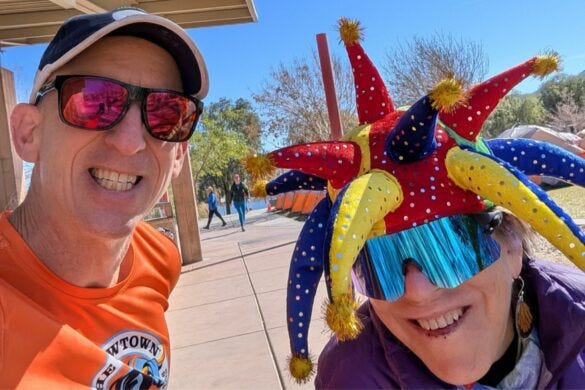
Her laughter stuck with me, however, even as I accelerate, briefly, to marathon pace across the bridge, where the faux grain swirls started to feel edgy and irritating underfoot. To runners comfortably shod in the latest maximalist shoes, barefoot running must indeed seem “painful and stupid,” but to non-runners, the entire sport of running is pointless and masochistic. Why subject yourself to any kind of pain unnecessarily, whether it’s in the bottom of your feet, leg muscles, knees or hips or any other part of the body? Why would you do this to yourself?
Maybe I should sign up for a really long race this year, sounds like fun.
The intimacy of running

We experience intimacy in so many different ways throughout our lives, and even within a day. While the intimacy between lovers is often the first thing that comes to mind, consider the more pedestrian occurrence of feeding someone or of helping someone dress themselves. Think about the level of care and trust that requires. It’s what a parent does for their child. It’s what the closest of friends would do for you when you need it most.
For me, intimacy is sharing a vulnerable moment with someone else. For me, that intimacy is key to the beauty of running.
Runners often talk about the art of discovering more about themselves as we push our bodies and minds on a run. We find our limits, and we find our support structures through that. We find our people.
Indeed.
If you missed last week’s edition, you can read it here:

Now, go running!
— Nico
🏃🏻♂️
Thanks for sharing my race recap, @Nico. The best part of the day was the community. Second best were the views from the course, and getting to watch the sun move across the sky from dawn to dusk.