

Hello and welcome back to Five Things!
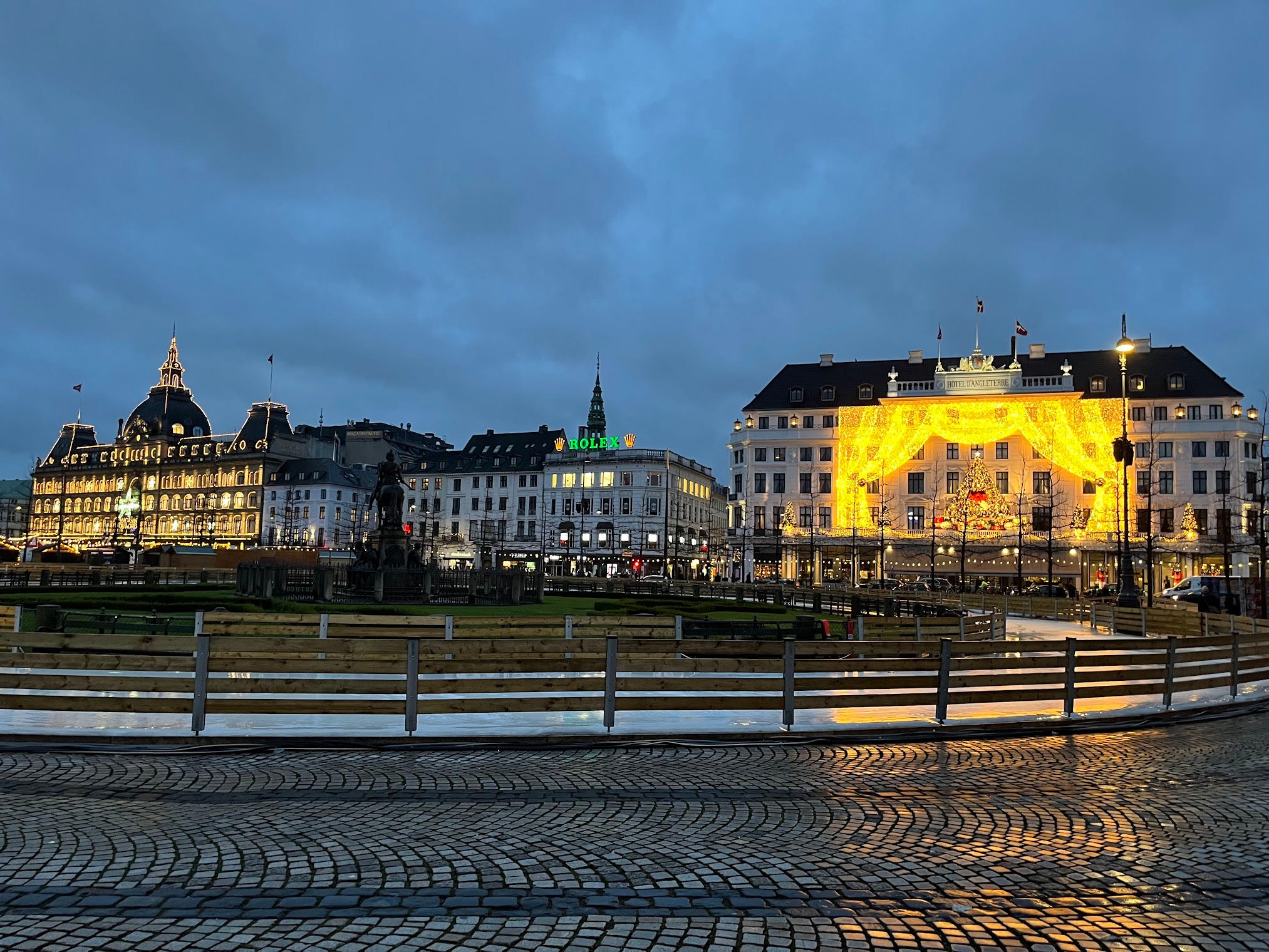
I went to Copenhagen this week for some meetings and I got to walk around the city a bit. Every time I am in Copenhagen I realize that I really want to be in Copenhagen more often. It is a city that does so many things just right. They have this really nice big pedestrian zone in the middle of the city, they have huge bike lanes everywhere, they have a clean and fast metro system, they have great design everywhere and they have wonderful and happy people. It really is a fantastic city. Oh, and I totally forgot to mention the food. I had amazing beets for dinner, I had great smørrebrød for lunch, not to mention the non-alcoholic craft beer. And of course cinnamon rolls and cardamom knots. Those bakeries are insanely good. The only really bizarre things was the train ride from Hamburg to Copenhagen and back, which happened in complete darkness, even though I left in the afternoon. I didn’t even notice the crossing of the Great Belt. Anyhow, go visit Copenhagen.
Here are this Sunday’s Five Things - enjoy!
Is Gen X Actually the Greatest Generation?

There’s a collective fascination with Generation X, for both good and ill, as told by numerous think pieces and memes that have begun proliferating like gremlins in recent years. Most of these memes are humblebrags created by Gen X-ers themselves, applauding our toughness and resilience, honed by benign parental neglect (“The official sports drink when I was a kid,” reads a caption over a child drinking from a garden hose), or celebrating our own coolness, an aura cultivated by pretending not to care (“Them: The world is falling apart! Gen X kids: Have you ever had a bologna potato chip sandwich?”). Many express nostalgia for the lost relics of a simpler time, like mixtapes, malls, daytime soap operas, the mentholated burn of Noxzema or the ritual Friday night rental of Blockbuster videos.
I mean, seriously, Gen X is obviously the greatest generation. And I need to rewatch Breakfast Club again.
AI chatbots can sway voters better than political advertisements

A multi-university team of researchers has found that chatting with a politically biased AI model was more effective than political advertisements at nudging both Democrats and Republicans to support presidential candidates of the opposing party. The chatbots swayed opinions by citing facts and evidence, but they were not always accurate—in fact, the researchers found, the most persuasive models said the most untrue things.
The findings, detailed in a pair of studies published in the journals Nature and Science, are the latest in an emerging body of research demonstrating the persuasive power of LLMs. They raise profound questions about how generative AI could reshape elections.
So, in the future we will be approached online by bots who want to start political conversations with us and it will happen in a way that we don’t even understand how we are getting manipulated. Hopefully somebody develops an anti-manipulation wrapper that I can use when being online and that shields me from these bots...
Model Employees

The main reason, then, that digital twins have attracted so much investment may be that there isn’t much else that looks promising. It appears that as real productivity growth increases remain out of reach, the last resort for capital is the automation of worker oversight — or what the writer Jason E. Smith has punningly called “managing decline.” Digital twins assist in supervising (not supercharging, revolutionizing, or reimagining) production. For all the anxiety today about robot-induced unemployment, the main application of new tech in the workplace is to discipline employees, not to replace them. Simulations aren’t coming to steal your job. They’re coming to make your job worse.
This is a different look at the concept of digital twins and it is one that let’s me rething my fascination with the concept.
Aging Out of Fucks: The Neuroscience of Why You Suddenly Can’t Pretend Anymore

For decades, your prefrontal cortex—the part of your brain responsible for executive function, social behavior, and impulse control—has been working overtime. It’s been monitoring social cues, calculating risks, suppressing authentic responses, and managing everyone else’s emotional experience.
This is exhausting work. And it turns out, it’s unsustainable.
Research in neuroscience shows that as we age, the brain undergoes a process called synaptic pruning. Neural pathways that aren’t essential get trimmed away. Your brain is essentially Marie Kondo-ing itself, keeping what serves you and discarding what doesn’t.
And all those neural pathways dedicated to hypervigilant people-pleasing? They’re often first on the chopping block.
I don’t think I was ever really good at this, but I note that my tolerance for bullshit is declining even more.
To grow, we must forget… but now AI remembers everything

In the age of hyper-personalization — of the TikTok For You page, Spotify Wrapped, and Netflix Your Next Watch — a conversational AI product that remembers everything about you feels perfectly, perhaps dangerously, natural.
Forgetting, then, begins to look like a flaw. A failure to retain. A bug in the code. Especially in our own lives, we treat memory loss as a tragedy, clinging to photo albums and cloud backups to preserve what time tries to erase.
But what if human forgetting is not a bug, but a feature? And what happens when we build machines that don’t forget, but are now helping shape the human minds that do?
Also, I guess we need to understand that we are still human and thereby far from perfect. We might have access to digital tools to mitigate this, but it is human not to be all powerful. We need to work on this to get better and not just demand more digital tools.
That’s it. Have a great Sunday! If you missed last Sunday’s edition of Five Things, have a look here:

— Nico