
The weekend starts here! Welcome back to Five Things Tech!
Silicon Valley’s quantification fetish is not just annoying, it is quietly hollowing out the everyday messiness that makes life bearable, from chatting in a shop to getting lost in your neighborhood . The Guardian piece argues that outsourcing thinking, contact and even love letters to AI leaves us more isolated and less resilient, while I keep thinking that, yes, we should absolutely seek more human interaction, but I still enjoy when tech just removes friction and lets me skip some stupid chores . At the same time, China is industrializing the energy transition at a speed that makes Western debates look ridiculous: solar and wind are being built so fast that the grid cannot really cope, prices go negative, companies struggle, but the net effect is that fossil incumbents finally feel real pressure and energy poverty might actually shrink . It is messy, it breaks things and it shows how far behind we are while we are still nostalgically talking about new nukes instead of fixing permitting and building more cables .
On the industrial side, you see the same pattern: Chinese EV makers like BYD and their peers are pushing cheap, decent cars into every market they can reach, while policymakers in the US and Europe try to hide behind tariffs and national security arguments . I genuinely do not get why this is such a surprise to anyone: the Western auto industry ignored electrification for too long and will now need taxpayer support to soften the landing, otherwise we will see a lot of factories going dark . Europe is at least waking up on defense and trying to rebuild its own capabilities, from drones to artillery, because relying on Washington while Trump openly questions NATO solidarity is obviously not a sustainable strategy . And then, in a nice little twist of internet history, Yahoo pops up again with Scout, an AI answer engine that actually tries to be friendly to the open web, which is kind of refreshing in a world where everyone else seems busy walling content into proprietary bots .
Read these Five Things Tech to stay ahead of the curve - and to have great conversation starter pieces for tonight’s dinner parties or receptions!
What technology takes from us – and how to take it back

Silicon Valley is full of tyrants of the quantifiable. For decades, its oligarchs have preached that our criteria for what we do and how we do it should be convenience, efficiency, productivity, profitability. They have told us that to go out into the world, to interact with others, is perilous, unpleasant, inefficient, a waste of time, and that time is something we should hoard rather than spend.
This ends up meaning that we can minimise our presence in the world and maximise time spent working and online, which also means maximising alienation and isolation. This has involved a reordering of society right down to our retail landscapes. Many things have become harder to do in person. Of course, there are well-recognised upsides, but the downsides are no less real: public spaces and public life have withered, including some of the places in which we once acquired our goods. All those errands – buying milk or socks (in the past, I would have said the newspaper) – meant moments of human contact, moving among strangers and making acquaintances, maybe observing the weather and the natural world. These activities meant becoming more familiar with your surroundings, feeling at home beyond the confines of what you rent or own.
I sometimes feel the same and think that we really should look for interaction with other people. But then again, oftentimes the tech just removes friction, which I also like.
The Firewall Against Chinese Cars Is Cracking
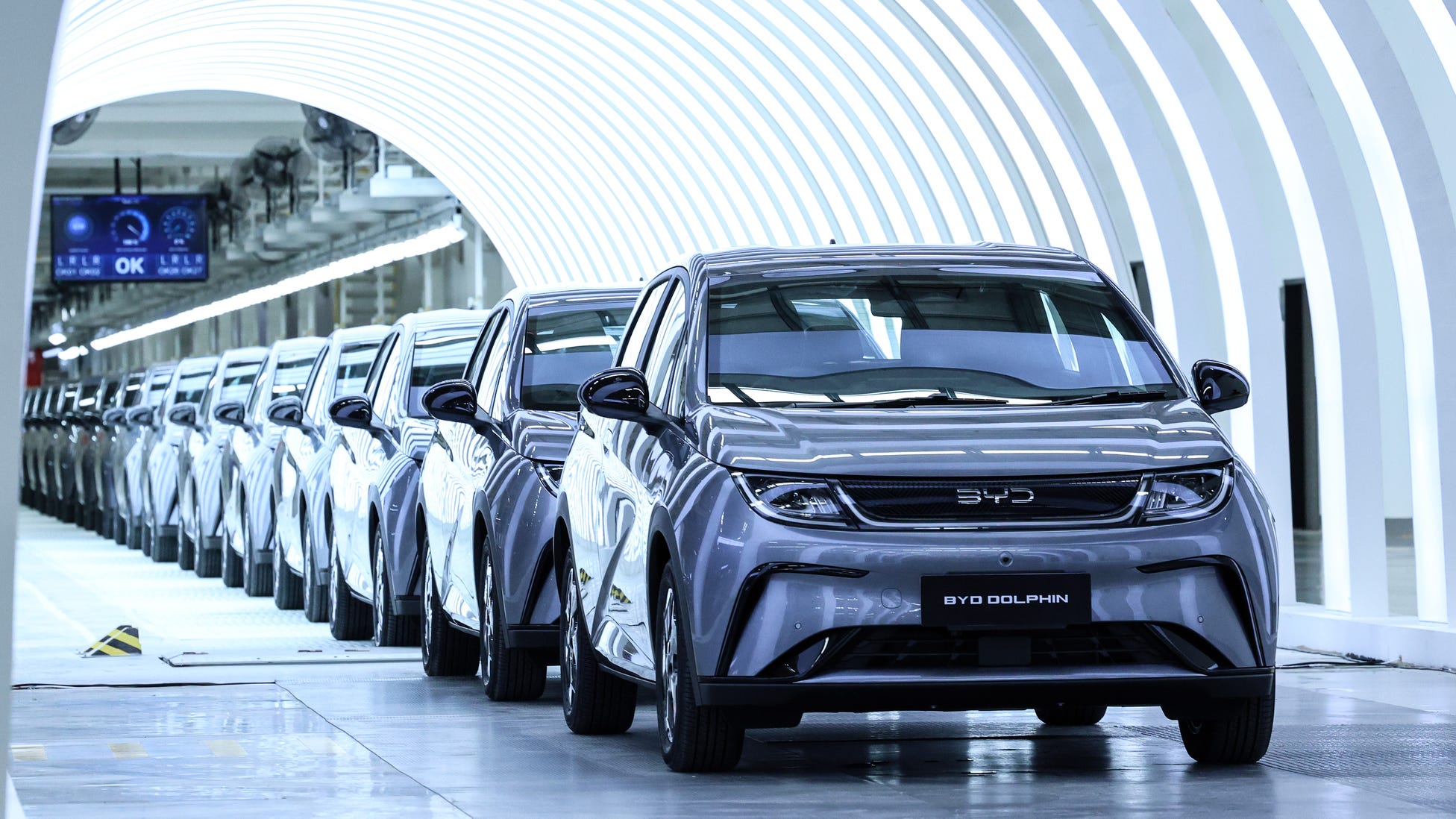
The secret to BYD’s success is simple: The company makes high-tech electric and hybrid cars and sells them at incredible prices. The tiny BYD Seagull costs as little as $8,000 in China, and it’s a megahit in several countries. The Chinese car industry—not just BYD but also its many competitors that also make affordable cars—is quickly taking over the world. In Europe, Chinese models make up nearly 10 percent of new-car sales, in large part because they’re typically thousands of dollars cheaper than options from homegrown Volkswagen and Renault. And in Mexico, about 20 percent of new cars are made in China.
I still don’t understand why this is such a rude awaking for so many people. It is blatantly obvious that the auto industry refused to change and will now pay a hefty price, which means we as taxpayers will need to step in to avoid mass unemployment.
Europe’s $1 Trillion Race to Build Back Its Defense Industry

The continent’s once-sclerotic defense industry is churning out drones, tanks, ammunition and other weaponry at its fastest pace in decades as the region looks to rearm in the face of Russian aggression and divides with Washington. But there is still some way to go. The cost of replacing current U.S. military equipment and personnel in Europe would be around $1 trillion, according to the International Institute for Strategic Studies think tank. Some holes remain in the region’s manufacturing capability, including stealth fighters, long-range missiles and satellite intelligence.
While Europe has increased its defense production in recent years, its fragmented industry currently lacks the capacity of its U.S. peers, which are financed by the world’s largest military budget.
Still, sharp increases in military spending across Europe and renewed efforts in research and development are bringing operational independence closer—and in some cases it is happening surprisingly quickly.
I certainly don’t like rearmament, but I do understand that it is necessary now. Also, it is good that Europe finally develops a sense of agency when it comes to defending the content itself.
China’s Renewable Energy Revolution Is a Huge Mess That Might Save the World

The reason for this brain-warping mad dash of solar development? At the start of 2025—in an attempt to rein in the renewables sector—Beijing announced that it would discontinue a long-standing policy that had effectively propped up renewable energy prices, pegging them to that of the “baseline” coal power in each province. Any solar capacity that went in after May 2025, Beijing declared, would no longer get this deal. So the all-out solar installation frenzy was simply a mass attempt to get in under the old terms.
After May, sure enough, new solar deployments plummeted. The ensuing four months each added just 10 gigawatts of new solar on average, half of the prior year’s pace—but that’s still considerably faster than America at its peak.
In China, one problem with all this burgeoning, majestic new solar is that it’s completely overwhelming the national electrical grid, technically and economically. For electricity markets to work, grid managers must constantly balance supply and demand—but the former can’t always be throttled back when it exceeds the latter. Nuclear power plants can’t just be switched on and off whenever solar power floods the grid. And some Chinese coal plants provide heat to communities through steam—so they need to run even if the electricity they generate is superfluous.
This is what happens if you build like crazy: not every part of the infrastructure gets developed at the same time. Still, China is moving forward very quickly with wind and solar while we are still debating the revival of old technologies.
Yahoo Scout looks like a more web-friendly take on AI search

In a funny twist, Yahoo may be perfectly positioned to do this well. Because Yahoo runs huge content verticals like Sports and Finance, with a big newsroom of its own and partnerships with many other publishers, it has a huge amount of high-quality reference material for Scout. It also has Yahoo Weather and Yahoo Mail and Yahoo Horoscopes and Yahoo Shopping and Yahoo So Many Other Things Besides. Yahoo is a full-fledged content machine, and it can just point an LLM at all that content. “We’re the only ones who can take our user data, our usage data, our content, our relationships and information, and combine that with everything we know about search into an AI answer engine,” Lanzone says.
I didn’t know Yahoo! still existed. This looks kind of cool!
That’s all for now! Thanks for reading! If you missed last week’s Five Things Tech, you can find it here:

🤖
— Nico