
Good morning!
Baby, it’s cold outside. But I did manage to go get my rhythm back and I ran four times last week, with some 15 deegrees celsius between a run at 9 degrees in Brussels, Belgium, and a run at -6 degrees in Hamburg the next day. I do not mind the cold at all, just the slipping and sliding across the ice is a bit annoying.
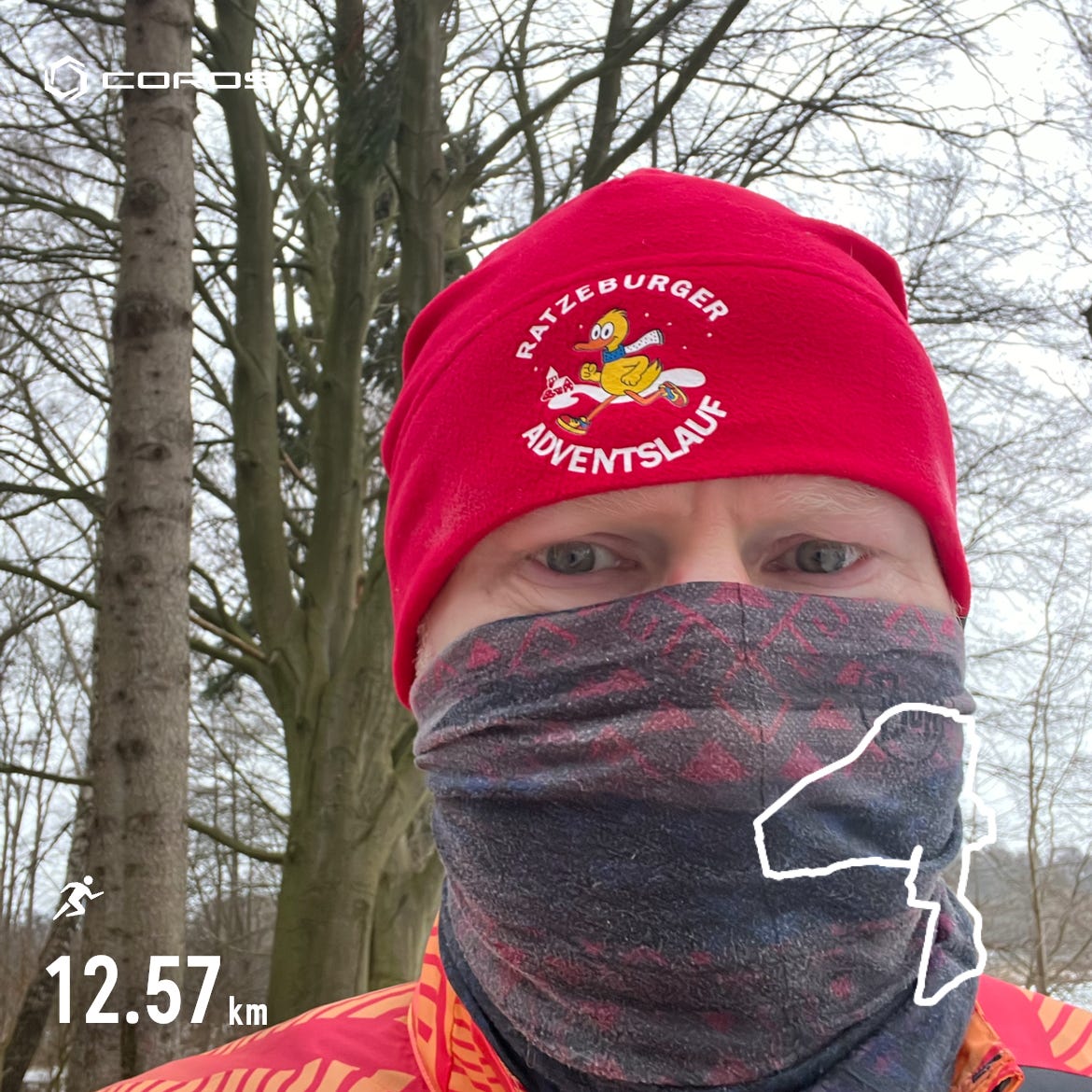
I still cannot get over the fact that the Polartec Alpha Fleece I’m wearing is classified as a baselayer at 66 North - how cold does it get there in Iceland? I am just wearing a light jacket over it as wind protection.
Enjoy these five articles and then go running! 🏃🏻♂️
Run and a bun - the rise of social running groups

An alternative to traditional running clubs, several all-abilities groups have popped up, each establishing strong ties with businesses.
Ending weekly runs in neighbourhood bars or coffee shops, they operate as inclusive social hubs.
At the same time, there has been a rise in common interest running groups that focus on shared identities, social causes, and lifestyle preferences.
While I do not participate in a run club (tried it, liked it, just don’t want anything more on my calendar), I think it is awesome how people organize this just for the love of running and community.
How Running’s Burrito League Went From Internet Oddity to Mainstream Movement

How far would you run for a year’s worth of free lunch?
This question has rattled around in thousands of runners’ brains throughout January, due to an eccentric athletic competition. The rules are simple: jog endless laps around an agreed-upon pizza joint or taqueria or bakery in your city. At the end of January, the person with the greatest distance wins the free food.
The challenge is called Burrito League.
If this were to work in Germany, we’d have to create the Döner League.
Your Watch Isn’t Smarter Than You

Every time I looked at my watch, it reported that my training status was “Unproductive,” even though I ran five or six times during the week with a couple of runs stretching past 2.5 hours. Even though I did one interval workout that got my heart rate and effort high enough to make saying a full sentence out loud a struggle, and one run where I paused my watch midway to do plyometric exercises like jump squats and skipping. Even though I did a few strength training and yoga sessions, and groomed and rode my horses.
My watch kept saying I needed higher intensity, i.e. more stressful, workouts to be “Productive.”
Isn’t that great? We have so much data and so much access to AI, yet still our running companions tell us something that is totally misleading and potentially harmful for our health.
Can On Outrun Its Finance Bro Reputation with More Tech?

Despite the impressive marketing campaigns, there’s still a disconnect between the brand's projected image and the people actually wearing the shoes. For now, it may simply be too early to see if On's efforts will pay off or if their yuppie reputation runs too deep for the creative crowd to cash in. But we’re still at the very beginning of the adoption curve, Miller says. And as revenue rises quarter after quarter, On is still raking in the cash, so even if they haven’t achieved adoption from the “cool” crowd, obviously something is working.
I find On fascinating. I have never run in their shoes, I see there stuff everywhere and I see many people wearing the shoes at meetings. They are obviously doing something right, otherwise they wouldn’t be seen everywhere, but they do not resonate with me at all.
What Tracking Can’t Measure

We often think of tracking as something inward-facing: data for analysis, numbers for progress, metrics for accountability. But there’s another side to it that we rarely talk about. When we track and share our movement, we make ourselves visible. And visibility—especially in a new place—creates the possibility for connection.
From a sport psychology perspective, that connection matters more than we often realize. Social support consistently shows up as a buffer against stress and mental fatigue, both of which directly influence how hard effort feels. When you’re traveling, training alone, and carrying cognitive load from work or school, that fatigue can quietly accumulate. The body may be capable, but the mind feels heavier. Effort feels sharper.
Community changes that equation. Feeling seen and supported doesn’t make the work easy, but it makes it more sustainable. It lowers the perceived cost of effort. It reminds us that endurance has always been relational, even when it begins in solitude.
These are really insightful observations about running with others.
If you missed last week’s edition, you can read it here:

Now, go running!
— Nico
🏃🏻♂️