

Hello and welcome back to Five Things!
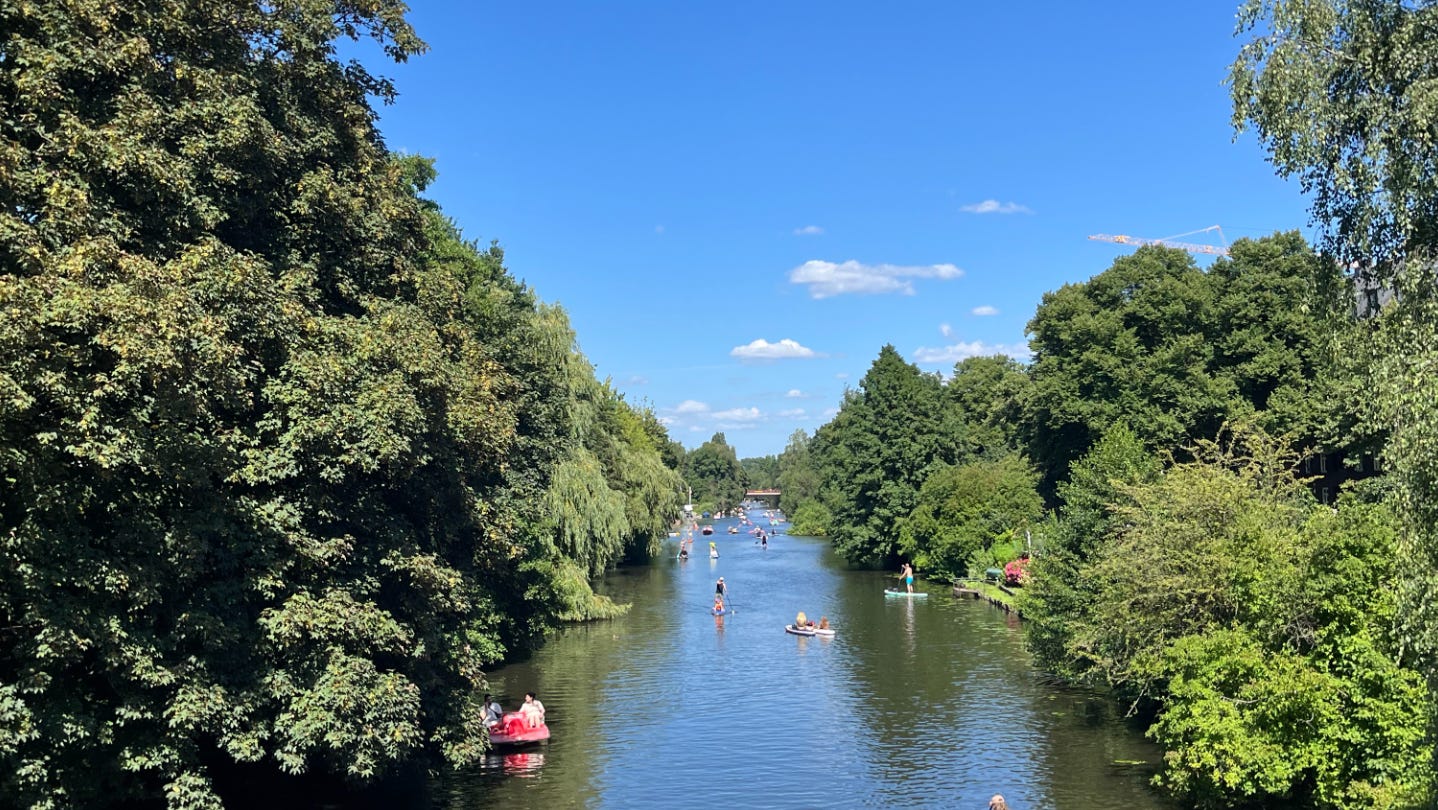
School’s out for the summer! I am happy for my two youngest kids that they can now spend 6 weeks without school and I am even happier for myself that I do not have to get up too early in the morning. And in our true fashion, we waited until the kids were home to finally decide on a vacation. I really don’t understand how people can book their vacation months in advance. How do they know in the winter what they want to do in the summer? For the last few years I have advocated to go to Norway, but my family wanted warmer temperatures. After the heat wave we had in June, Norway seemed more appealing than ever. So after losing to England in the World Cup, the beautiful country of Norway is now facing the next challenge: me and my family will be there a week from now. I am so thrilled as Norway is such a wonderful country and I long wanted to experience the long summer nights there. I had hoped to watch Norway play in the final game next Sunday, but sometimes football is just tough love…
An Inconvenient Moment for an Extreme Global Heat Wave

We can now take a daily average temperature for the world’s oceans, and it’s currently breaking all records. Remember, the oceans are storing more than ninety per cent of the heat that humans have caused with greenhouse-gas emissions; without that storage, air temperatures could have risen from a baseline average of about sixty degrees Fahrenheit, to a hundred and twenty-five degrees. And we’re stuffing more heat in all the time—in 2025, we increased the heat stored in the ocean by twenty-three zettajoules. A zettajoule is a sextillion joules, and the joule is a standard measure of heat or energy, but the figure might mean more expressed in other terms: as the thermal scientist John Abraham explained, it’s the heat equivalent of “12 Hiroshima bombs being detonated each second, for every minute, hour, and day for the entire year.” That ocean storage is temporary; events like El Niño are the functional equivalent of flinging open the sauna door and letting the warmth cascade out.
The world is getting to warm and still too many people are denying that global warming is caused by us humans. We have to do so much more to stop gobal warming and yet people want to shovel more coal into the fires.
The Revenge of the Philosophy Majors

“So, I think I’m going to major in philosophy” is the kind of undergraduate statement that for decades has terrorized tuition-burdened parents, inspiring dark visions of basement-dwelling offspring who fail to launch. Diogenes the Cynic lived in a clay jar. Baruch Spinoza ground lenses to pay the bills. Friedrich Nietzsche survived on the kindness of family and friends. The idea that a philosophy degree is a ticket to a lifetime of underemployment persists. When Google DeepMind announced in April that it was hiring someone whose actual business-card title would be “Philosopher,” the memes flowed. “It’s so the A.I. can learn what it feels like to have a college degree and still be unemployed,” someone posted on X. Of philosophy majors’ job precarity, a Redditor contributed: “Half are pulling espresso shots while silently debating whether the customer who ordered oat milk truly exists.”
It makes a lot of sense that AI labs are employing philosophers to figure out more about the LLMs they are building. Even more interesting is this question: what are we supposed to be doing once we figure out that an LLM has become conscious?
The extraordinary life and quiet death of the world’s largest iceberg

Iceberg stories all end the same way, and maybe that’s part of why these frozen giants can so captivate our imagination. Their inescapable destiny mirrors a classic mythic archetype: that something so colossal is ultimately so fragile in its essence, so helpless to avoid its eventual fate. But they also fascinate us because the path they take from enormity to nothingness can be so unpredictable. A23a was just a gigantic block of inanimate material, subject to the complex interactions of this planet’s relentless chemical, physical, and meteorological forces. And yet there is something about an object like this—with all its apparent capriciousness, stoic immensity, and pure extraordinariness—that irresistibly tempts us to project upon it something more.
Icebergs are really impressive. I find it hard to grasp the sheer size and what it means when they are melting.
China Is Devastating the Last Stronghold of German Industry

The Mittelstand—a broad tier of midsize manufacturers, mainly specialized in capital and intermediate goods and reliant on exports—once thrived by making machines for factories everywhere. But China is now closing the quality gap and offering prices as low as half those of their European rivals.
As panic spreads among German manufacturers, layoffs are rolling through formerly prosperous towns and villages with no living memory of a downturn. The moment could become a political turning point for a country whose wealth was largely created by the Mittelstand, or “middle-class”—shorthand for the inner core of Europe’s largest economy.
This is something I really do not understand. For decades these companies have been exporting technology to China and now they are surprised that China can build technology themselves? Nobody saw that coming?
Is This the End of Booze?

Most social changes happen slowly, but the turn against alcohol has been sudden. The share of Americans who say moderate drinking (defined as one or two drinks a day) is “bad for health” doubled in just the last 10 years. Two-thirds of Americans under 35 now tell Gallup that alcohol is harmful in any quantity.
This alarmist viewpoint is not exactly conspiratorial nonsense. It received an endorsement from the scientific community last month, when the federal government released a controversial alcohol study, which researchers claimed was suppressed by the alcohol lobby and the government. Buoyed by the Streisand effect, and thus widely covered in the news media, this study concluded that any drop of alcohol may increase a person’s mortality, with the risk accelerating after one drink per day.
As I am getting older, I notice that I need longer to sleep off the effects of alcohol. So I am currently developing a habit of drinking non-alcoholic beer, which is getting better and better. Also, the variety is insane these days, not comparable with the one option that was on the market when I reached legal drinking age.
(…continue reading.)
That’s it. Have a great Sunday! If you missed last Sunday’s edition of Five Things, have a look here:

— Nico