

Hello and welcome back to Five Things!
I want the Olympic Games to be in Hamburg - in 2040 or 2044!
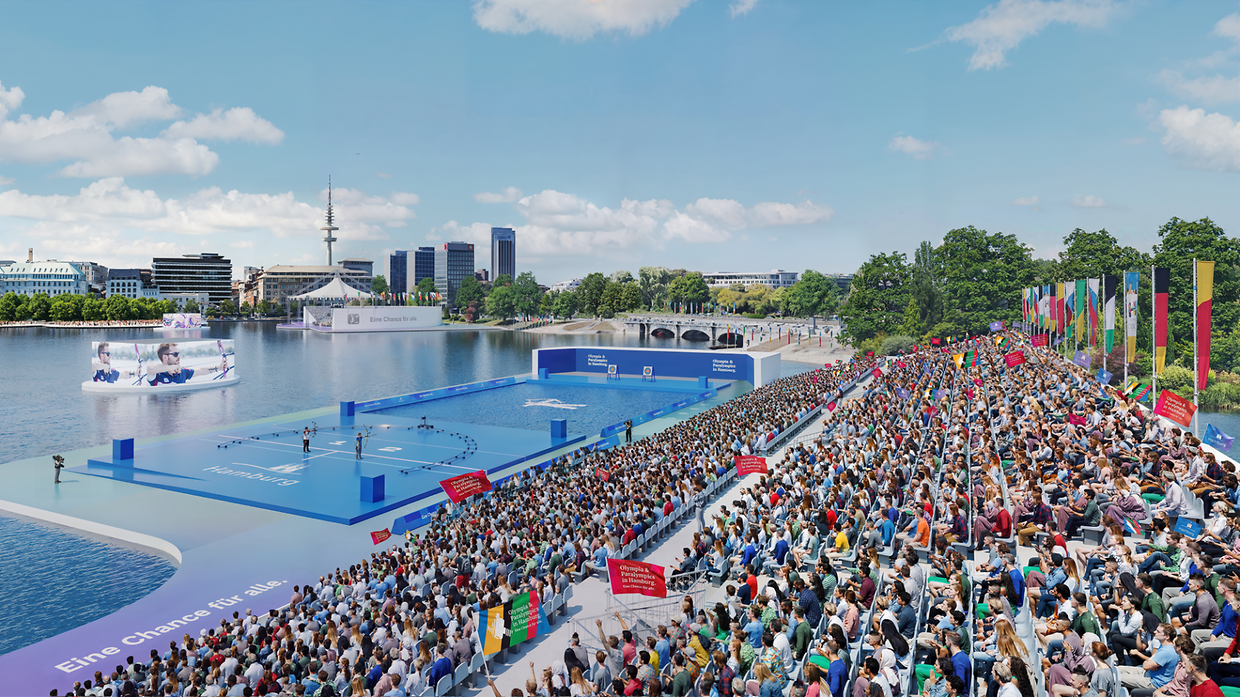
I am all for it and I sure hope the fine people of Hamburg will overwhelmingly vote for having the Olympic Games in our city. It would be a huge boost for the city, in worldwide recognition, better infrastructure, more housing, but most importantly lots of new sports facilities for kids. Also, I love it when a huge sports event is in town and I can hear so many different languages being spoken and can see so many people being awestruck by the beauty of our city.
So of course I vote yes in the referendum!
Love Language

For a satirist or a cynic, Esperantists are easy fodder. Many of its enthusiasts are undeniably eccentric: longhairs, train enthusiasts, nudists, and Brazilian spiritists (who believe that Esperanto is the language of the vastly more peaceable spirit world, and that it was sent to earth from God, via Zamenhof, to bring about universal harmony). But Esperanto was once a legitimate force in global politics. Before facing heavy persecution during World War II, it gained serious traction in international labor, anticolonial, and anarchist movements. And most of today’s Esperanto adherents are neither naïve nor even particularly batty. They include European social democrats and elder anarchists, Chinese Communists, Central African youth pacifists, and Ukrainian-independence advocates. There are Esperantist gay-rights advocates, Bible translators, lawyers, and Go players. Why, against all evidence to the contrary, would this motley group—many of whom are no strangers to global conflict—still believe that the widespread adoption of a century-and-a-half-old invented language might yet overpower the world’s divisions, particularly as the global order, by any reasonable account, appears to be rapidly disintegrating?
I new very little about Esperanto and while I am always amazed when people speak more than two languages fluently, I certainly do not feel like trying out what it is like to speak a language that remains more of a concept than a reality.
Challenging the Narrative of European Decline

It’s true that in some cases European adoption of new technologies is handicapped by market fragmentation: The single market, as the Draghi report emphasizes, remains incomplete, and that is one reason European productivity, even measured at PPP, is lower than in the US.
But overall Europe has done well at making use of technologies developed elsewhere. And there is no obvious reason to believe that this will change — that, for example, the fact that US companies are leading the development of AI models will make the US economy as a whole better than Europe at making use of AI in the years ahead.
What should worry Europe, instead, are the geopolitical implications of US/Chinese leadership in advanced technology. We used to have a global economic system overseen by a mostly benign and in any case law-abiding hegemon. That system was, however, gradually eroding with the rise of China, and has now taken a drastic hit with America’s abandonment of the rules it largely created.
I am more worried about complacency in Europe than about the tech race. We have constraints that actually make us better positioned as we need to build more robust business cases. Unfortunately, though, too many people do not want to think and change, which is what we need to do to get out of our dependencies that we have established with the USA.
What I Learned About Loss While Skateboarding at Costco

What I love about Costco is that it is the perfect expression of how skateboarders can turn even the blandest form of American architecture — the big box parking lot — into a thriving community space. At a time when people are lonely and disconnected, a bunch of 40- and 50-year-olds gather around low-stakes terrain, reconnecting with old friends and joking about tricks they can no longer do.
I miss skateboarding. But ever since I realized how much I could hurt myself when I won’t stand a trick, it was no fun anymore. I was 18 then. Now I am a bit wiser and the only thing I am doing every few years is that I show some kid how to ollie. Muscle memory still works. Skateboarding is awesome, for all the right reasons.
The Man Who Reads Books For a Living (One Every Two Days)

His work forces a near-daily conversation between two halves of Clarke’s brain: the lifelong reader who devours books and the cinephile who dreams in celluloid. The nuts and bolts are this: an agent, executive, or producer sends Clarke a book or manuscript, blind. He reads it and writes a detailed beat-by-beat synopsis of the core scenes, settings, conflicts, and characters. Here, he quotes essential dialogue and, if any sentence-level writing stands out, includes excerpts. He then steps back to evaluate how the book might actually function on screen, that is, which elements are inherently cinematic, what can and can’t be rendered visually or dramatized, and what kind of movie or series the material wants to be. This is where the tension stretches tightest.
I love reading books and having the time to, and getting paid for, reading a new book every two days would be awesome. I assume it won’t last long until this would turn into a chore for me. Interesting how people can build a career around it.
Please Use AI

Be sure to use AI when making your next, I don’t know, meal plan, for example. Definitely do not call your friend who loves to cook and ask her for her favorite recipes or tips or ways to save time making meals, because you will end up talking for longer than you had hoped, hearing, perhaps, about her father’s cancer diagnosis or how lonely she’s been or even what she’s planted in her spring garden and then lost with the early frost.
And be sure to use AI when planning that next camping trip, the last one you will take with this particular child. Definitely do not text your friend who has fly-fished every river in Pennsylvania and biked every backwoods trail, because you might end up texting back and forth for the rest of the day or even meeting up late for a beer and hearing how he has ended each recent night black-out drunk, or perhaps you’ll hear how his cousin is an idiot on Facebook or maybe just that he repaired his own washing machine and is pretty damn proud of that.
This newsletter has been handcrafted. And it shows.
That’s it. Have a great Sunday! If you missed last Sunday’s edition of Five Things, have a look here:

— Nico